Zero Wastewater technology developed by Tekno-Forest Ltd has recently received widespread attention across Europe. It is a zero-emission system for car washes that eliminates wastewater discharge. The system, combining microbiology and engineering, uses bioadabtable Zeroline detergents, biofilm carrier reactors and flotation units to purify wash water, requiring fresh water only for the final rinse. Currently operating in Finland and Sweden, with plans to expand to other European markets. The system achieves high COD reduction with Zeroline detergents designed for rapid biodegradation. While the operating cost is low and water savings are significant, Tekno-Forest Ltd. aims to expand further, targeting operators seeking to meet stricter water use regulations and sustainability standards.
Why should a motorist, your customer, choose a ceramic coating program over a conventional program at an automatic car wash?.
Fusion Ceramic coating vs. Conventional washing programs
✅ Qualitative Advantages
1. Enhanced Gloss and Shine
Fusion Ceramic coating imparts a deeper, more intense gloss, making the vehicle’s paint look newer and better maintained compared to regular washes.
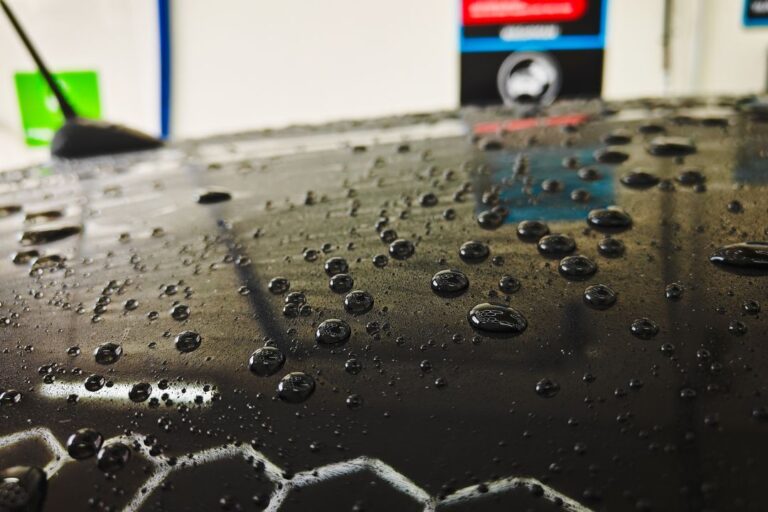
2. Hydrophobic and Dirt-Repelling Features
Car surfaces coated by ceramic layer repel water and contaminants more effectively, helping the car stay cleaner longer and reducing water spots, grime build-up, and staining.
3. UV- and Chemical Resistance
Fusion Ceramic coating provides superior protection against UV-rays, oxidation, and chemical contaminants (acid rain, bird droppings, tree sap).
4. Ease of Cleaning
The coating creates a smooth, slick surface that makes future washes quicker and more efficient, often requiring less scrubbing or cleaning effort.
5. Protection Against Minor Scratches
While not fully scratch-proof, Fusion treatment increases scratch and swirl mark resistance, helping maintain the vehicle’s paintwork.
💵 Economic Advantages
1. Long-Term Cost Savings
Reduced detailing and repainting expenses, less detergent and water use: Ceramic coatings applied at an automatic car wash can last for months, reducing the need for frequent manual polishing, waxing, or repainting. The hydrophobic feature means also less frequent washing, saving water and detergent costs.
2. Extended Vehicle Appearance & Resale Value
A well-maintained, glossy finish with superior protection enhances overall vehicle value, aiding resale or trade-in.
3. Less Maintenance Time and Effort
The ease of cleaning after Fusion coating saves time and labor costs over the vehicle’s lifetime, especially beneficial for busy motorists.
4. Additional Revenue for Car Wash Operators
Providing Fusion Ceramic program it will be created an upsell opportunity, attracting customers willing to pay premium prices for long-lasting protection and aesthetic benefits.
Fusion Ceramic Treatment at automatic car washes blend excellent aesthetic and protective qualities with long-term savings and convenience, making Fusion an attractive option for many vehicle owners compared to conventional wash-only or waxing programs. This combination of qualitative enhancement and economic efficiency justifies the investment, providing peace of mind and ongoing value with minimal extra effort.
More information: https://pineline.com/product/fusion_essence/
Unveiling Pineline Fusion Ceramic Advance: Redefining DIY Car Care
In the dynamic world of automotive care, Washman and Tekno-Forest Oy Ltd. are embarking on a new journey, transforming the DIY car wash experience. At the forefront of this evolution is Pineline Fusion Advance, a ceramic wetcoat treatment developed and manufactured by Tekno-Forest Oy Ltd. Let’s delve into the technical intricacies of this innovative solution and explore how it’s reshaping car care routines while offering unprecedented value to car owners.
The coating retains its properties even after several washes.
Pineline Fusion Ceramic Advance stands as a testament to innovation, offering a quick and hassle-free solution for car enthusiasts looking to elevate their car’s appearance and protection. Crafted with precision and expertise, this ceramic wetcoat boasts exceptional durability and resistance to environmental elements, ensuring that vehicles maintain a pristine finish for longer periods.
Simplicity and efficiency
The application process of Fusion Ceramic Advance is designed with simplicity and efficiency in mind, making it accessible to car enthusiasts of all skill levels. Washman’s state-of-the-art facilities ensure that Pineline Fusion Ceramic Advance comes out from the low-pressure water gun pre-diluted to the optimized concentration. Car owners simply spray the solution onto the vehicle’s surface and activate it with reverse osmosis (RO) water, unlocking its full potential for protection and shine. This activation method enhances the product’s bonding capabilities, ensuring a durable and long-lasting finish without the need for complicated procedures or extensive curing times.
While Fusion Ceramic Advance may not offer the same level of durability as professional-grade ceramic coatings applied by detailers, it comes with a fraction of the cost. Professional detailing services often come with a premium price tag, reflecting the comprehensive range of services offered and the expertise required. In contrast, Pineline Fusion Ceramic Advance delivers professional-level results at a fraction of the cost, allowing car owners to enjoy the benefits of enhanced protection and shine without breaking the bank.
DIY vs. professional services
Comparing DIY services to professional detailers reveals a multitude of benefits. While professional detailers offer comprehensive services, including paint correction and interior detailing, the costs associated can be prohibitive for many car owners. In contrast, Washman’s DIY car wash services prioritize essential maintenance tasks, such as washing, waxing, and protecting the vehicle’s exterior, at a fraction of the cost. With Pineline Fusion Ceramic Advance, car owners can enjoy the satisfaction of achieving showroom-worthy results without compromising on quality or affordability.
Furthermore, the hydrophobic properties of Fusion Ceramic Advance offer additional benefits beyond aesthetics. By repelling water and contaminants, the ceramic wetcoat facilitates effortless cleaning and maintenance, ensuring that dirt and grime slide off the surface during washing. This not only reduces the risk of paint damage but also minimizes water spots and streaking, leaving behind a spotless finish with minimal effort.
In conclusion, Pineline Fusion Ceramic Advance represents a revolutionary advancement in the realm of DIY car care, offering professional-level protection and enhancement with unparalleled ease of use. Through its innovative formulation and exceptional value proposition, Fusion Ceramic Advance empowers car owners to take control of their car care routine, fostering a deeper connection with their vehicles while redefining the way they interact with car care products.
The DIY Wash Experience with Pineline
In the fast-paced world of automotive care, innovation is key. As car owners become increasingly conscious of the products used on their vehicles, brands like Pineline are leading the charge in revolutionizing the car wash experience. At the forefront of this movement is the introduction of Pineline Fusion, a ceramic coating that empowers customers to take their car care into their own hands.
Pineline, already a household name in automated car washes, has partnered with cutting-edge facilities like Washman to bring a new era of DIY washes to consumers. Washman is not just any car wash; it’s a hub of innovation where the latest advancements in automotive care are put into practice. By offering a comprehensive lineup of Pineline products, including presoak chemicals and shampoos, Washman ensures that customers have access to the same cutting-edge technology and effectiveness that are typically reserved for professional car wash settings. With Pineline’s advanced formulations and Washman’s commitment to providing top-notch service, car owners can trust that their vehicles will receive the care and attention they deserve, all within the convenience of a DIY wash station.
Central to Washman’s success is the introduction of Pineline Fusion, a ceramic coating that redefines the DIY car wash experience. Unlike traditional coatings that require professional application, Pineline Fusion empowers car owners to achieve professional level results themselves. This product not only enhances the appearance of vehicles but also provides long-lasting protection against environmental elements, ensuring that cars maintain their showroom shine for longer.
What sets Pineline Fusion apart is its compatibility with Washman’s use of reverse osmosis (RO) water. RO water undergoes a purification process that removes impurities and contaminants, resulting in water that is ideal for cleaning and coating applications. When combined with Pineline Fusion, RO water further enhances its performance, ensuring a flawless finish with every application. Additionally, the spot-free drying finish achieved through RO water leaves vehicles sparkling clean without the need for manual drying.
It’s worth noting that Pineline products hold the prestigious Nordic Swan label, further demonstrating their commitment to environmental sustainability. This certification ensures that Pineline’s products meet rigorous environmental standards, providing consumers with peace of mind knowing that their car care products are eco-friendly.
Markus Malinranta, CEO of Washman, commented on the partnership with Pineline, stating, “We are thrilled to partner with Pineline to bring cutting-edge products and technologies to our customers. Pineline Fusion combined with our use of RO water, allows us to provide a superior and effective car wash experience. We believe that innovation is key to staying ahead in this industry, and our collaboration with Pineline is a testament to that commitment.”
In conclusion, the partnership between Pineline and Washman represents a paradigm shift in the car wash industry. By leveraging innovative products and advanced technologies, Washman is setting a new standard for DIY car washes. Car owners can now access professional-grade products like Pineline within the convenience of Washman’s facilities. This means that consumers who prefer to wash their own cars can achieve exceptional results using the same high-quality products trusted by professionals in the industry. Moreover, by utilizing Pineline’s advanced formulations and Washman’s eco-friendly practices, car owners can contribute to reducing their environmental impact while maintaining the pristine condition of their vehicles.
Pineline Zero Wastewater Emission – how does it really work?
The news about the Pineline Zero Wastewater Emission concept attracted widespread attention. At the same time, it raised questions in industry publications.
“Finnish company claims to have found the key to zero waste water”, writes Rene Passet on the popular CarwashPro.com -portal. The article highlights the paucity of detailed technical information; how can the complete elimination of wastewater be technically possible?
The closed and emission-free water treatment process combines microbiology and engineering skills. The achievement is the result of decades of scientific research, dedication to product development and commitment to raising the standards of water treatment technology.
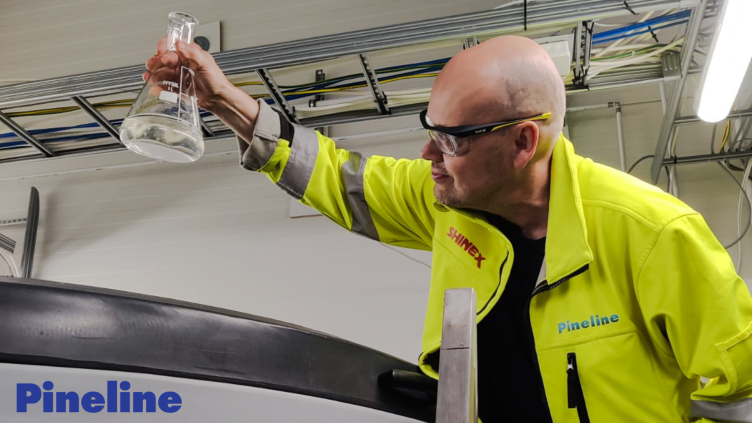
Actual Zero Emission equipment on a site.
Biofilm carrier reactors: the biological powerhouses
”At the core of the system are biofilm carrier reactors and advanced processes refined for biological degradation together with the Zeroline detergent system”, explains PinelineGroup CEO Esa Mäkinen.
The strain, meticulously developed over years, exhibits unparalleled proficiency in bio-digestion, targeting specific organic compounds present in car wash effluents. The biofilm serves as a robust microbial community, enhancing the efficiency of organic material breakdown with a level of precision unmatched by traditional methods. Adding oxygen to any tank is simple, but controlling the biological process is a science.
Controlled environmental conditions within the reactors play a pivotal role, maintaining parameters such as pH, salinity, and microbial density. This real-time monitoring ensures optimal conditions for the bacterial strain to thrive, accelerating the degradation of contaminants with unparalleled precision.
Flotation units: Precision separation and sludge tank integration
Following the biofilm carrier reactors, treated water proceeds to flotation units – a critical phase designed for precision separation. These units employ flotation mechanisms to meticulously separate suspended particles, microbial biomass, and other contaminants from the water. Simultaneously, the separated residuals are directed into a sludge tank, a dedicated reservoir designed for the efficient collection of residual by-products.
This integrated process ensures a high degree of separation efficiency, leaving the treated water phase with minimal residuals. As a side note, any remaining fine particles in the water phase from the flotation unit undergo a brief secondary purification to guarantee the highest water quality.
Zeroline product family: Engine for microbial metabolism
Central to this intricate system is the Zeroline product family (the products of Pineline), acting as the primary nutrient source for the bacterial strain within the biofilm carrier reactors. The chemical composition of Pineline products aligns precisely with the strain’s metabolic preferences, driving robust microbial activity and efficient breakdown of organic material.
Sludge tank: Efficient residue management
The sludge tank serves as the final container for residues collected during the treatment process, such as dead bacteria, solid dirt, and heavy metals. The tank is emptied carefully every year, and the residues are disposed of properly. The process complies with strict environmental regulations.
Every component, from the biofilm reactors to the sludge tank, contributes to a future where sustainability, efficiency and responsibility play a significant role. An advanced water treatment system will redefine the operations and practices of car washes.
A revolutionary moment in car wash technology: Pineline Zero Wastewater Emission -concept.
In the world of automated car wash facilities, after years of relentless product development, Tekno-Forest Ltd. has reached a significant milestone: a zero-emission water treatment process that redefines the industry’s standards and paves the way for a more sustainable future.
Emissions from car washes come from the dirt on the surface of the cars, substances coming off the washing equipment and the car, as well as the chemicals used. Conventional car wash operations have long grappled with the challenge of wastewater disposal, which has often led to pollution and resource depletion. Now Tekno-Forest rewrites the rules. Not a single drop of wastewater needs to find its way into the sewer system.
Eco-friendly without labels
At the core of this revolutionary technology is an impeccably refined bio-digestion process that effectively breaks down all organic materials. This method ensures that no pollutants or contaminants are released into the environment.
Furthermore, this innovation challenges the basis of environmental certifications for car wash facilities. The days of relying on eco-labels that take into account the environmental effects of cleaning chemicals and the biodegradability of wastewater are now numbered. Tekno-Forest’s system makes such certifications unnecessary, as it already directly implements environmental responsibilities.
Saving nature and money – and you
One of the most remarkable features of this water treatment process is its simplicity and ease of maintenance. Unlike traditional systems, it operates odorless, eliminating the unpleasant smells often associated with industrial wastewater treatment. This technology is not only eco-friendly but also user-friendly, aligning perfectly with the growing demand for sustainability in our society.
In addition to its environmental benefits, this technology offers unparalleled cost savings for car wash businesses. The elimination of wastewater disposal costs, coupled with reduced chemical usage, translates into significant financial advantages. It gives car wash operators the opportunity to direct resources to developing other areas of their operations, such as improving service quality or investing in sustainable practices.
Can you afford not to join?
This milestone in water treatment is not just a technological advancement; it represents a cultural shift towards greater environmental awareness in the car wash industry. It is a testament to what can be achieved when we commit to protecting our planet. As we implement this emission-free water treatment process, we are ushering in a new era where environmentally friendly car washing operations will become the new norm.
In conclusion, the era of zero-emission water treatment has arrived, and it will forever change the landscape of the car wash industry. You thought you had to choose between efficient cleaning and being environmentally friendly? Well, not any more. Focused on durability, ease of use and cost-effectiveness, this technology is revolutionizing the way water is purified in car wash operations. And directly contribute to a more sustainable world.
Hydrocarbon-based cleaning solvents in a car wash
Cars quickly become dirty in the Nordic climate, so effective washing processes and cleaning agents are needed to clean them. Most car washing is performed mechanically in a car wash facility, but also various methods of manual washing are common.
Hydrocarbon-based cleaning solvents are used a lot in car wash facilities because they dissolve dirt well. Hydrocarbon solvents are particularly well suited for removing the greasy dirt formed by accumulations of bitumen, traces of fuel, oil and de-icing salt on the surface of the car.
Hydrocarbon solvents are classified as substances that are hazardous to health, and often also as substances causing chronic health effects. Furthermore, as flammable substances, they can pose fire and explosion risks while also presenting a serious threat of contaminating soil and groundwater.
Composition of most commonly used hydrocarbon solvents in a car wash
Cleaning solvents typically comprise aliphatic, naphthenic and aromatic hydrocarbons. Of these, aromatic hydrocarbons are particularly effective solvents, but they also pose greater risks to health.
Washing processes and routes of exposure
Cleaning solvent is typically spread onto the surface of the car to be washed as a roughly 5…30% microemulsion. The microemulsion is spread as a fine spray that is allowed to act on the surface for some tens of seconds. After this, brushing and rinsing remove the solvent and dissolved dirt along with the water, which takes it into the ground or into a wastewater collection system.
During the spreading phase, high local concentrations of solvent spray and aerosols can occur. For this reason, particular attention must be given to the ventilation in the washing area when using hydrocarbon solvents. If working without personal protective equipment, an employee might inhale any solvent vapours and aerosols in the air, and these can cause serious damage to the health.
Health hazards and environmental hazards
Hydrocarbon solvents are chemicals that pose risks to health and to the environment. Diseases known to be linked to solvents include various types of damage to the central nervous system. These diseases exhibit symptoms such as unusual fatigue, memory and concentration disorders, headache, psychological aberrations, symptoms deriving from the peripheral nervous system, and dizziness. Also, some hydrocarbons are known to be carcinogenic. Particularly benzene, which occurs in hydrocarbon solvents in at least small quantities, is known to cause cancer. Consequently, respirators should always be used when working with hydrocarbons, and also migration of vapours to other work spaces (eg, via ventilation ducts) should be prevented. For these reasons, efforts are being made to replace hydrocarbons with safer, renewable solvents.
Car washing activities account for most of the wastewater produced by carwash and fuel distribution facilities. The chemicals used in car washing, if released into the environment, are detrimental to the soil and groundwater. Furthermore, in high concentrations they can also cause harm in the sewer network and in wastewater cleaning processes.
Typically, some 2000-2500 litres of water per hour are used in a car wash. Water containing detrimental concentrations of oils and greases is prevented from being conducted into the public wastewater network by a correctly dimensioned Class II oil separator. Proper operation of the separator should be checked and the separated mixture of waste oil and solvent removed often and delivered in the correct manner for treatment as hazardous waste. There should also be a sampling and shut-off trap at the wash site, situated upstream from where wastewater is conducted into the public wastewater network. A facility must always agree with the sewage utility operator about the arrangements for industrial wastewater.
Work safety and the storage and handling of hazardous chemicals
An operator of a facility is always responsible for the safety of his/her employees. Hydrocarbon solvents are classified as substances that are hazardous to health, and often also as substances causing chronic health effects. For this reason, employees should be given adequate induction training and instructions on the use of the wash chemicals being used, health inspections should be arranged, Safety Data Sheets should be on display and readily available, employees should be provided with the necessary personal protective equipment, and the use of such equipment supervised.
Hydrocarbon solvents are generally flammable materials and they can present a risk of fire and explosion. Consequently, the requirement of all legislation relating to chemical safety and explosion proof premises should be addressed. For example, a facility operator using hydrocarbon solvents should assess the explosion risks attached to his/her operations and classify areas exposed to explosion risk (such as solvent dispensing and storage locations, as well as the oil separator and its immediate environs). The operator of a facility must also keep an explosion protection document. The pertinent regulations for the transport of hazardous substances must be addressed when transporting hydrocarbon solvents.
Summary
When using hydrocarbon solvents, particular attention should be given to all aspects relating to the safety of employees and customers. Employees should wear personal protective equipment and washing spaces should be adequately ventilated. The migration of vapour to other work spaces must be prevented.
The use of solvents can pose a risk of fire and explosion, so work procedures and the equipment selected should address this fact.
The use of hydrocarbon solvents requires appropriate technical solutions for the pre-treatment of the wastewater produced in washing, as well as the correct use and supervision of these solutions.
Sources:
Ajoneuvojen pesutoiminta huoltoasemilla ja muissa vastaavissa kohteissa (in Finnish), [Vehicle washing in service stations and other similar facilities], Finnish Petroleum and Biofuels Association, 2015.
Getting cars clean in varying winter conditions is challenging. Many parties blame this on road salting. Why, and is there any basis in the claim?
Tekno-Forest Ltd’s test team clarified the matter in an article published in Bensiiniuutiset in 2018.
IS ROAD SALTING THE CAUSE OF WINTER WASHING CHALLENGES?
In the study, washing results were examined in car washes at three different stations of the same service station chain. Behind the car’s front tire, near the sill board, six painted and clean test plates were attached. After that, the car was driven on the newly salted Helsinki-Tampere highway until a smooth and sufficiently thick layer of dirt accumulated on the surface of the plates. After removing the plates, three of them were left outside for protection. The other three were moved indoors for two days to dry. In this way, plates coated with both fresh dirt and hardened dirt were obtained for the test. In addition to these test plates, an asphalt bitumen film was applied to three clean test plates in the laboratory. The film was allowed to dry on the plate surface for two days. After that, a set of three plates (fresh, hardened and bitumen-coated plate) was attached to the side skirt of the car and the car was driven for a test wash at all three stations. In each washing machine, the most expensive “Brilliant Wash” program was selected. The washing program included a separately applied sill solvent. This ensured that the test plates were washed using a strong pre-soak.
Test washes were performed on the same day, within three hours. The outside temperature was -1 C.
The test plates were photographed just before putting them in the washing machine and immediately after the washing program.
What came out in the wash?
The salt stain disappeared almost completely from the surface of the test plates in all three washes. Some dark spots (bitumen pots) remained on the test plates of the first and third test stations. The clearest difference was in the washing of the brown bituminous film. At the second test station, the disc was mostly cleaned, whereas at the first station, only a slight cleaning was observed. At the third station, the bitumen film had remained almost completely on the surface of the board. Even with hardened salt dirt, the best washing result was achieved at the second station. At stations one and three, the salt dirt had not been cleaned from the surface of the test plate at all.
The right kind of liquid detergent for challenging conditions
The test results confirm that there are large quality variations in the washing results of different stations of the same chain. An acceptable washing result was achieved at station two, while the poor result of stations one and three points to the use of an unsuitable detergent system for winter conditions.
The quality deviations of washing programs of the same name are explained by the fact that washing machines and chemicals supplied by different manufacturers are used within the same service station or washing chain.
The weak washing results of stations one and three are partly explained by the lack of winter adjustments of the washing programs or the fact that the pre-soak concentrations in the program were left too low.
It is also possible that the “euro/washing” agreement applied in the industry is the reason for the general collapse of washing quality in winter conditions. Fixed-price contracts independent of the washing program do not encourage chemical suppliers to adjust detergent concentrations to the level required by the conditions, as this increases costs in the same proportion. This, in turn, increases the risk that customers’ dissatisfaction with the station’s washing results will increase, which in turn leads to weak washing sales development and an increase in demand for hand washing services. To prevent this from happening, you need a pre-soak solvent of the right type and targeted at the right place, with a sufficient concentration and duration of action, for the most challenging conditions of the winter season.